
LiveLiva world concept art
Real-world discovery
Find a partner through a shared interest and explore a local clue together.
Try a Seek meetup ↗Find a partner through a shared interest and explore a local clue together.
Try a Seek meetup ↗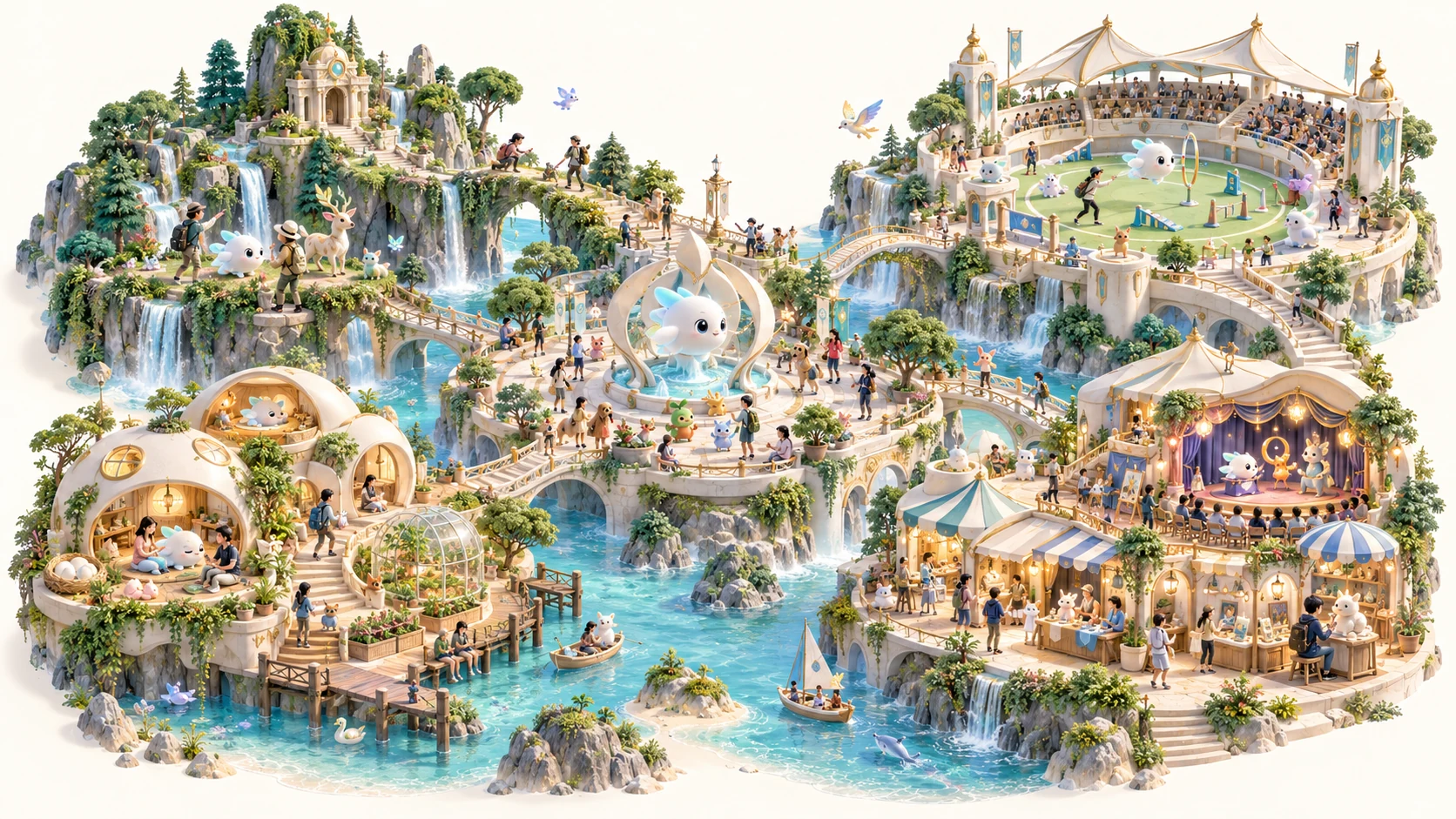
Choose material, define the rules and test a version that other players can visit.
Open the world studio ↗Anchor characters in a room or a street so people share the same event. Spatial co-presence is a research direction.
Explore past spatial work ↗
Carry identity, relationships and permitted memories across devices. Physical action requires a capable device and its owner’s permission.
Explore identity and runtime ↗Retain identity and the sources of experience. Each world decides which skills it accepts. Bringing a familiar companion back should change at least one choice.
Shared experiences give the next conversation context.
Individuals can be stored and transferred. The destination determines compatibility.
People recognize their companion through its embodied behaviour over time.
Enter the same task with a familiar and a new companion. Compare available actions, outcomes and whether players choose the companion again.
The field player inspects the neighbourhood. A remote partner searches archives. Each acts independently. Sharing a clue or making a promise changes the other person’s available routes.
A time, venue and group lower the friction of meeting.
Remote participants have a different view that can influence players in the field.
An AI host and quest rules provide a common setting for improvised action.
Identify whose contribution changed which action in the replay. Then see whether the same people choose another session.
Pangu turns material, scenes, objects and rules into an editable package. Each playtest targets a version. An adaptation retains its parent, permissions and credits.
Moving from prompt to prototype still leaves playtesting, tuning and publishing.
Discovery and invitations bring players. Authors improve the experience based on play.
Cosmetics can travel while each island defines its own rules.
A second author can publish a rule change independently. New players can feel the difference and both contributions remain traceable.
Record in-game completion, a physical visit and fulfilment as separate events. Authors maintain route versions. Real services need bookings, capacity, a provider and agreed shares.
Local authors turn observations and stories into self-guided routes.
Physical materials, street details and mobile validation deliver one experience.
Props direct attention to the site. The app supplies hints and tracks progress.
Compare independent completions, verified fulfilment, maintenance cost and the author’s next release. Cash settlement and repeat purchases require separate validation.
Companionship, role-playing and autonomy explain attachment. Shared life and local exploration add choices other people and places make possible. Creator economics and portable identity determine what can be maintained, shared or carried forward.
Seven values and their cases ↗Dialogue scales with interaction time, generation with work versions and multi-agent sessions with proposal rounds and retries. Distribution, moderation and author maintenance all count when testing whether repeat participation supports the service.
Inspect workload and cost assumptions ↗Each bar counts entries in a theme. An entry can appear in several themes.
Open research library (中文) ↗In the Land design, Liva is for companionship, Town for meeting, World for exploring and Realm for making. The four surfaces form the longer-term vision.
Explore the public prototype ↗Play can leave a skill, a keepsake or a new world version. Authors turn local stories into places others can enter. Playtesting and adaptation add contributions. Permission, credits and participation inform how value could be shared.
Creator economy design (中文) ↗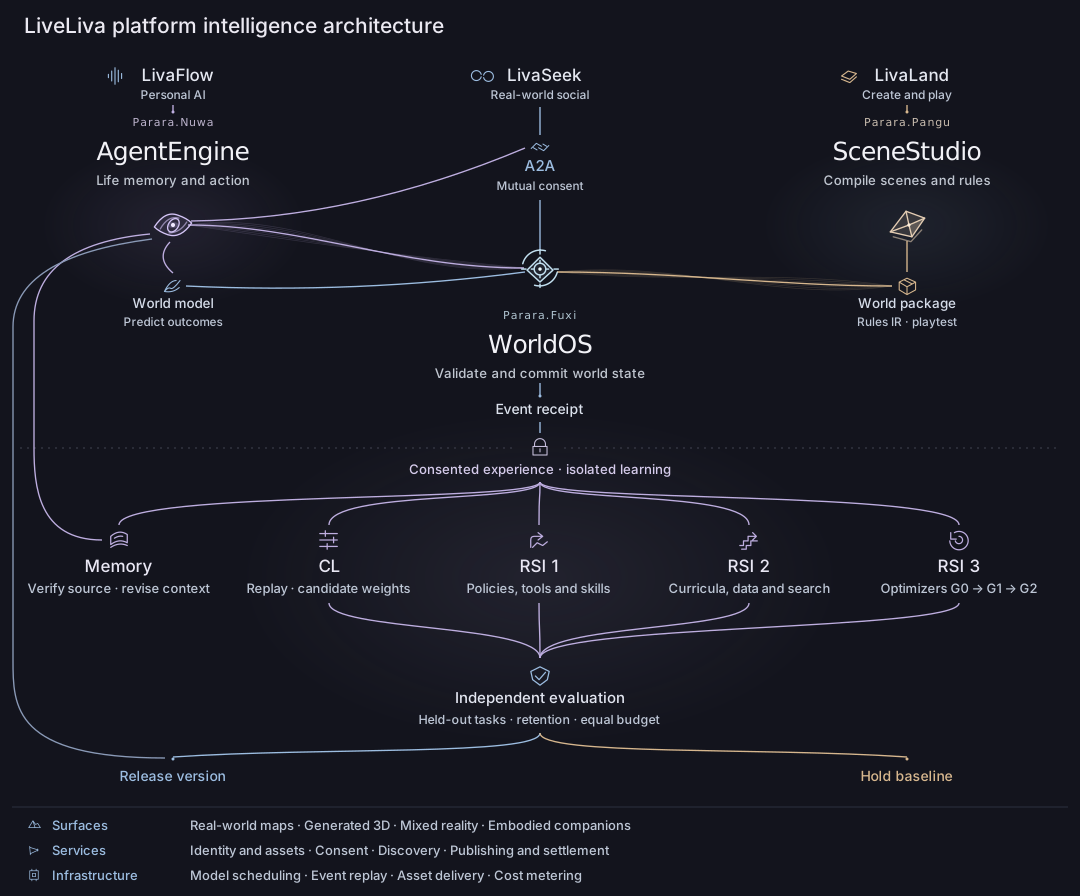 Open full diagram ↗
| Responsibility | Input | Output |
|---|---|---|
| Creation and rightsPangu | Materials, authors and permissions | A versioned, editable world with objects, conditions and rewards. |
| Identity and actionNüwa / A2A | Goals, allowed skills and public proposals | A proposal with the approvals it requires. Each person decides independently. |
| Prediction and executionWorld model / Fuxi | Current version, rules and legal actions | Predictions guide planning. Only validated actions commit state, cost and a receipt. |
| Learning and rollbackNüwa / RSI research | Permitted experience, corrections and outcome differences | Test new tasks and retained skills independently. Reject a candidate or restore a previous version. |
Huaiyang Liu founded Seengene after studying computer science at Peking University. His work in spatial reconstruction, AR interaction, developer platforms and AI characters informs LiveLiva’s research into people and worlds.
These figures refer to the founder’s previous ventures.
Background and projects ↗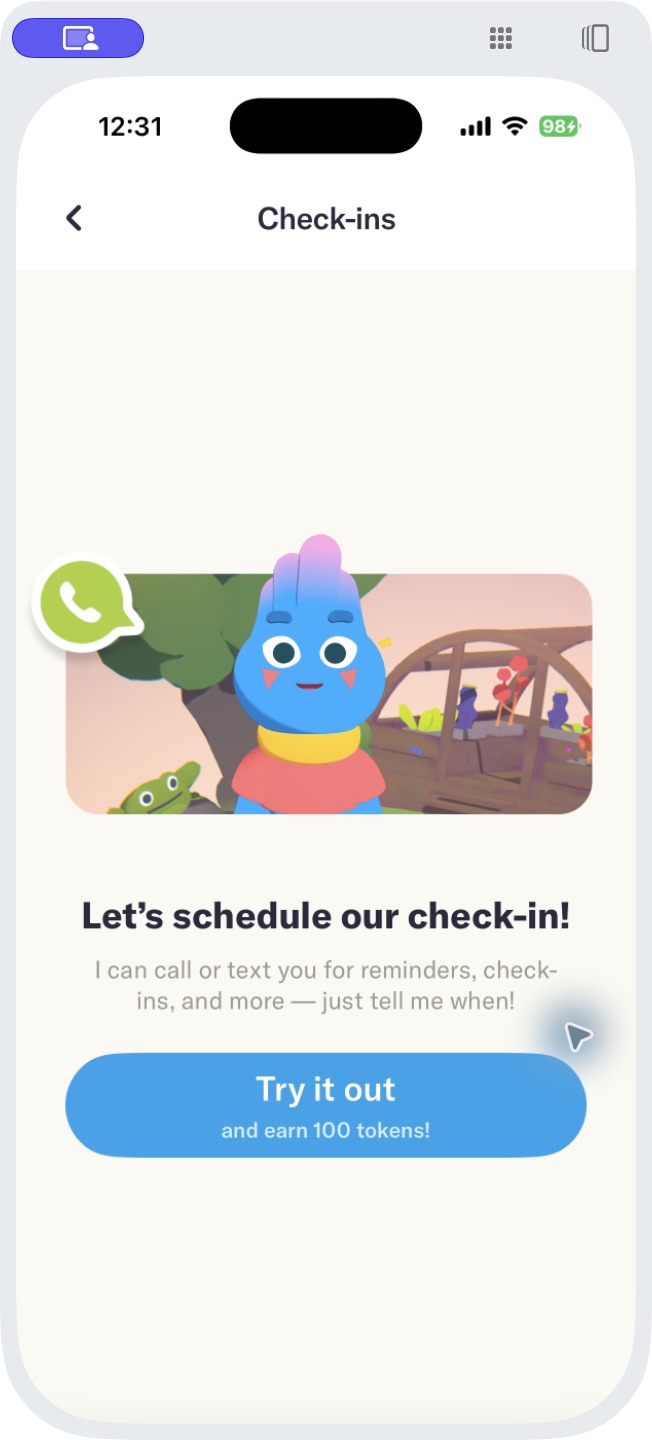 Tolan · Image and source ↗
 I’d Hide You · Image and source ↗
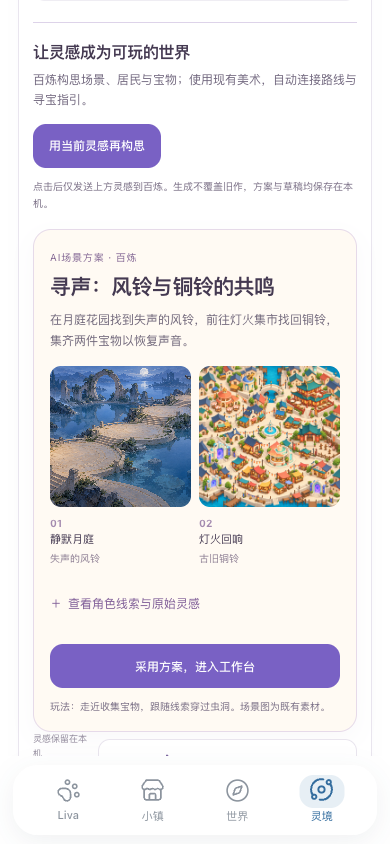 LiveLiva world blueprint prototype · Open creator studio ↗
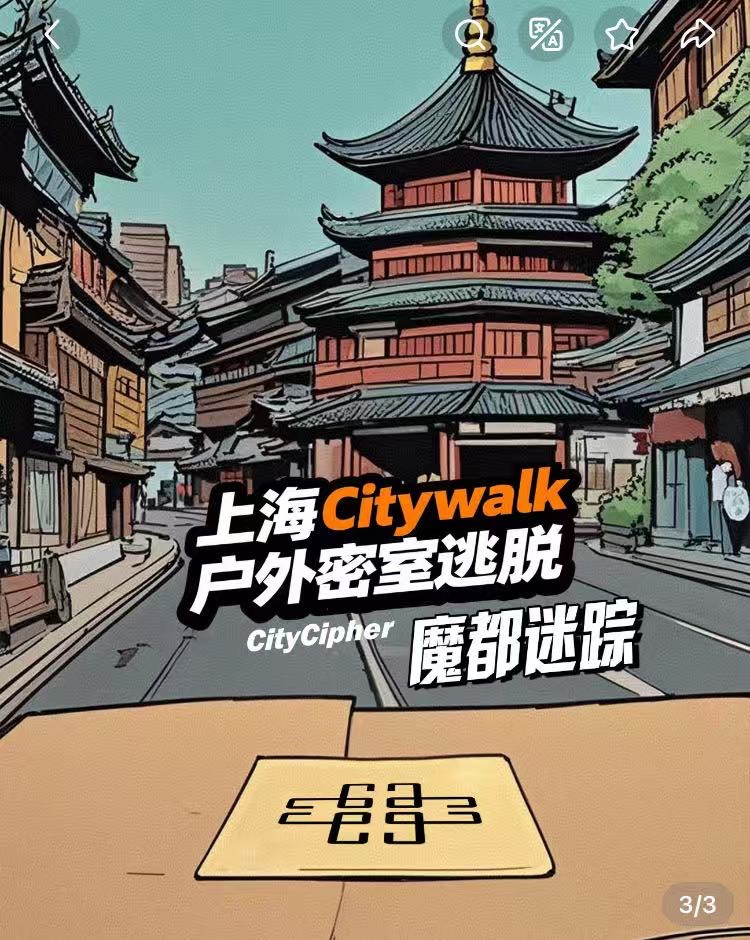 CityCipher · Image and source ↗